
Train Like a Fitness Model—At Home: Smart Tactics, Real Motivation & Results That Stick
11/30/2025


Train Like a Fitness Model—At Home: Smart Tactics, Real Motivation & Results That Stick
In 2025, training from home isn’t just a pandemic habit we forgot to shake. It’s become the go-to fitness move for thousands of people—especially those chasing that sculpted, fitness-model look without the drama (or cost) of a gym membership.
With hybrid routines trending hard and functional, bodyweight workouts stepping into the spotlight, you don’t need a personal trainer or a stack of weights to transform your body. The truth? Some of the leanest, strongest physiques are being built right at home—and yours can be, too.
So whether you're aiming for muscle definition, improved strength, or just want to feel fitter and more energized, this guide gives you the exact strategies to get there—plus the mindset hacks to stay locked in.
🔥 What Actually Works at Home (Bodyweight + Structure = Power)
🚫 Skip the Gym — Bodyweight Works (Better Than You Think)
Let’s get this straight: You don’t need a gym. Not to look like a model, and definitely not to build real strength.
Bodyweight exercises like push-ups, squats, glute bridges, lunges, dips, pull-ups (if you’ve got a bar), and core work are more than enough when done right. They target all major muscle groups, build serious strength, and—yes—deliver visible results.
And they scale. Just starting out? Modify the movements. Already fit? Try single-leg versions, plyometric bursts, or tempo reps to keep challenging yourself. No fancy gear required.
⚖️ Go Hybrid: Balance Strength, Cardio, & Mobility
In 2025, the "hybrid" training model dominates. That means mixing:
Strength sessions (2–3 times per week)
Cardiovascular work (think HIIT, jump rope, or low-impact home cardio)
Mobility and functional movement (dynamic stretches, yoga flows, etc.)
A well-balanced week hits all three. The result? A leaner, more athletic build with functional strength and mobility. Which, let's be honest, is exactly what fitness models actually train for.
💡 Pro Tip: Give your muscles 48 hours before hitting the same group again. Recovery is growth.
⬆️ Progressive Overload—Yes, Even at Home
Here’s the real secret sauce: progressive overload. It’s the principle that keeps your body evolving. All it means is: do a little more over time.
At home, that might look like:
More reps
Slower reps
Tougher variations
Supersets
Adding resistance bands (or eventually weights)
This constant push signals your body to grow stronger, build lean muscle, and get more defined. It’s how home workouts stop being maintenance and become transformation.


💪 Mindset + Motivation: Where Consistency Lives
Even the best training plan crashes without the right mindset. So how do you stay on track after the initial motivation fizzles?
🎯 Get Specific: Define Your “Why”
Vague goals like “get fit” won’t cut it. Instead, try:
“I want defined arms and abs in 8 weeks.”
“I’m aiming to run a 5k without stopping.”
“I want to feel confident shirtless/on camera/in my clothes.”
Once your “why” is clear, schedule your workouts like you would a meeting. Show up. Check in. Log the reps.
Also, track your progress—photos, performance, energy levels, endurance. Seeing even small changes can give you the fuel to keep going.
🎲 Keep It Fresh: Variety Beats Burnout
Doing the exact same workout daily? Recipe for quitting.
Alternate between strength days, HIIT circuits, mobility flows, and full-body functional work. This variety keeps your mind engaged and your body adapting.
Switch things up every few weeks, or sooner if you start feeling mentally checked out.
🔁 Make Fitness Part of Your Life—Not a Side Quest
If you treat training like a 30-day challenge and nothing more… that’s all it will ever be.
Instead: upgrade your entire lifestyle. Prioritize sleep. Hydrate. Eat like you respect your body. Manage stress. Move daily—even if it's just stretching or a walk.
Fitness models don’t "get results fast" because of magic. It’s because their lives are designed to support their goals. You can do the same—without the extremes.
🚀 4-Week Home Fitness Model Plan
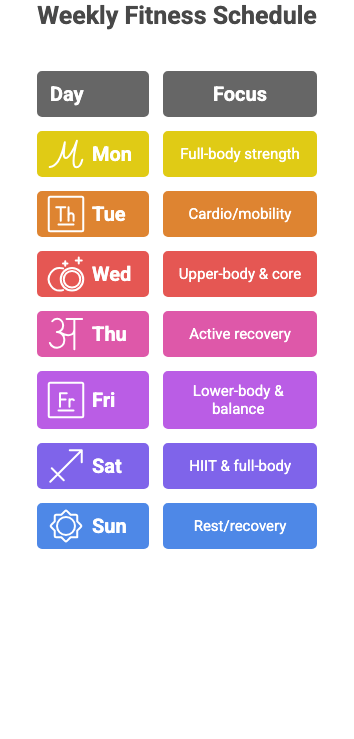
Let’s make it real. Here’s a 4-week jumpstart plan that hits every angle: strength, cardio, balance, recovery.
Strength Work: 3–4 sets of 12–20 reps
Cardio/HIIT: 15–25 minutes
Mobility: 20–30 minutes — essential for a model-esque, limber body
After 4 weeks, recheck: Are you stronger? Leaner? More energized? Adjust from there. Keep building.
🧠 FAQs: Fast Answers to Big Questions
Q: Can I really build a fitness-model body at home?
A: Absolutely. With bodyweight exercises, proper structure, and consistent effort, you can build strength and definition. Plenty of models do train primarily at home. The trick? Train smart. Stay consistent.
Q: How often should I train?
A: Aim for 4–6 sessions a week. Mix strength, cardio, and recovery. Just don’t go hard on the same muscle groups two days in a row.
Q: I stopped seeing progress—what now?
A: Time to up the challenge. Add reps, go slower, increase complexity, or add resistance bands. Change = growth.
Q: What about nutrition and supplements?
A: Nutrition plays a huge role. Eat enough protein, stay hydrated, avoid over-restriction, and get quality sleep. Supplements? Only if they align with your goals—food first, always.
Q: When will I see results?
A: Some notice strength gains and better energy in 3–4 weeks. Visible changes like muscle tone and fat loss usually show up around 6–10 weeks if you’re consistent. Everyone’s pace is different—stay patient.
💡 Final Words: Don’t Chase Quick Fixes—Build the Habit
You don’t need a gym, a coach, or fancy supplements to look and feel like a fitness model. What you do need is a strategy that fits your life, habits that support your goals, and the discipline to keep showing up.
Train smart. Rest well. Stay consistent. The results will follow.
Fitness isn’t just a look—it’s how you carry yourself. Confidence. Strength. Energy. And those are things you can absolutely build from your living room.